
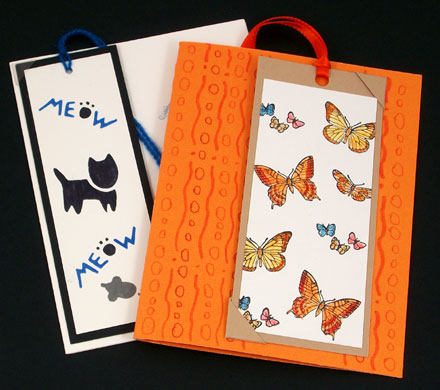
This greeting card tutorial features a design element that is also a gift. You'll see how to create a beautiful and functional bookmark that is the focal point for the card, and learn a simple decorative technique using markers. This tutorial also introduces colored card blanks and tips for using them successfully in your card making.
This greeting card tutorial builds on the previous tutorials, especially #1: Four Patch Cards and #2: Matted Clip-art and Photo Cards. If you are new to card making, review these tutorials before starting this one.
Refer to Tutorial #1: Four Patch Cards for how to make card blanks and envelopes.


Select colored cardstock for your card blank and a coordinating color of cardstock for the bookmark. For this card, choose a medium-tone cardstock for the card blank and a coordinating colored marker that can be seen when drawn on the cardstock. Two warm colors, orange and light brown, are used in the sample card. For more color combination ideas, refer to the color wheel concepts in the Paper Weaving Card Tutorial.
Tips: When using colored card blanks, it is important to use contrasting colors. The easiest way to do this is to use white cardstock as a major element of the card. Dark-colored card blanks require special consideration, since standard markers and rubber stamps aren't very visible on a dark background; however, gel pens and metallic markers can be used to good effect. For messages inside a dark card, use a liner of white paper.
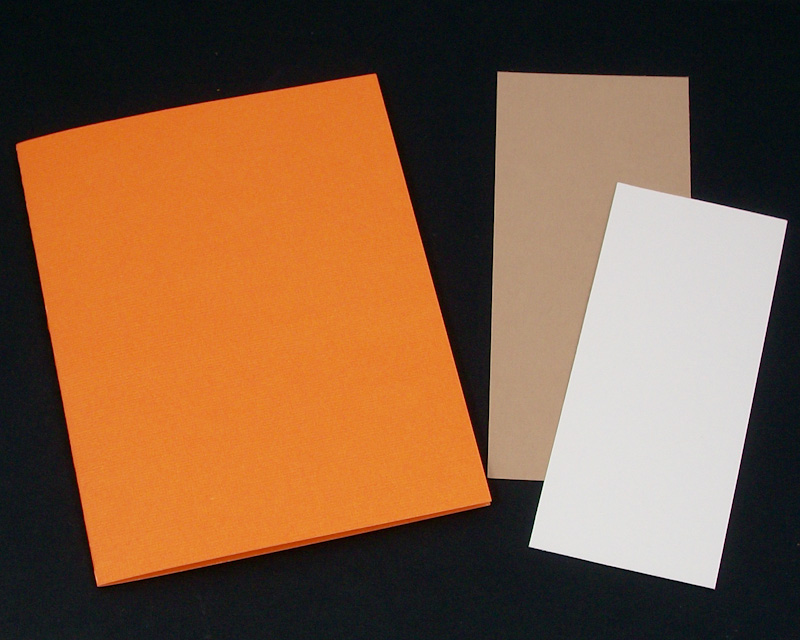
For the card blank, cut a full sheet of letter-size cardstock in half to make two 8½" by 5½" card blanks. Fold the card blank in half to make a 4¼" by 5½" card.
For the bookmark, cut a 2¼" by 5" strip from colored cardstock and a 2" by 4½" strip from white cardstock.
For attaching the bookmark to the card two photo corners are needed. Cut two ½" by 2" strips of colored cardstock to make your own color-coordinated photo corners.
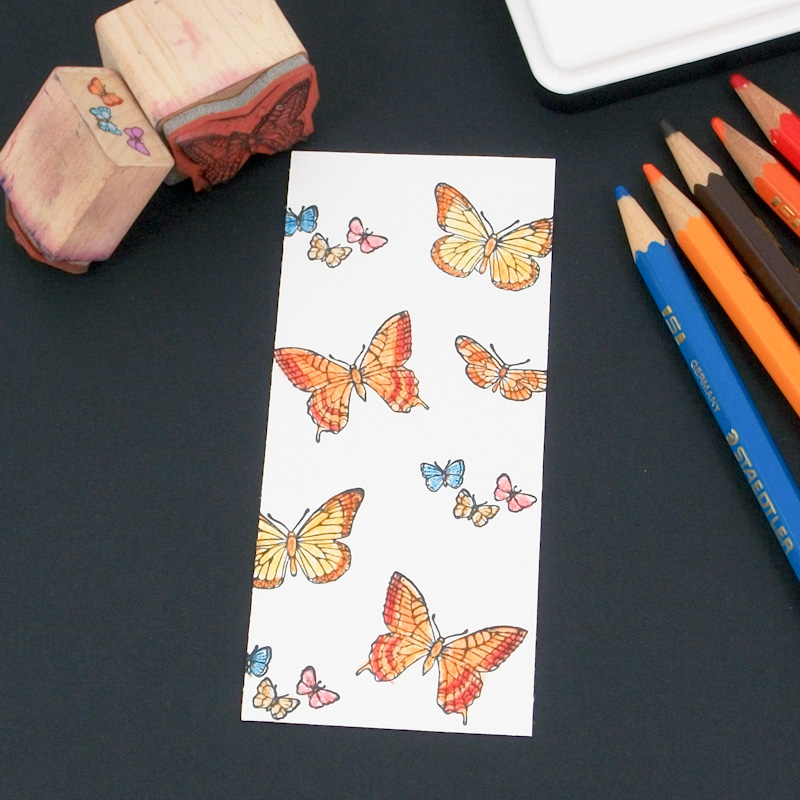
Since the bookmark is the major design element on the card, make it first. Using rubber stamps, stamp images on the white cardstock. Let some of the stamped images run off the edge of the cardstock.
Color the stamped images using markers or colored pencils. Be sure that the colors coordinate with the cardstock colors. In the sample card, a splash of blue, orange's complementary color, is used to liven up the card.
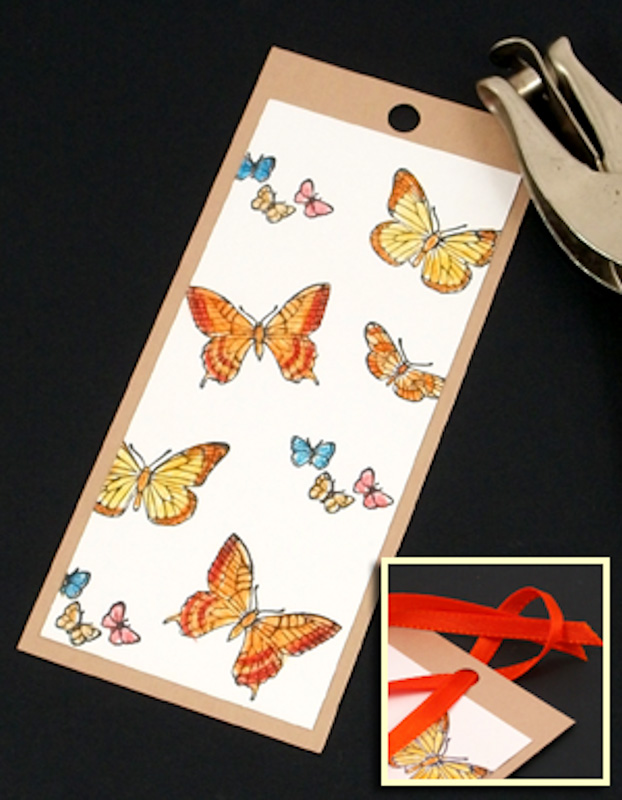 Glue the white cardstock strip to the colored cardstock
strip. Punch a hole at the top for the ribbon. Cut a 12" to 15"
length of ribbon and fold in half. Poke the fold through
the punched hole, front to back, and thread the tail through the
loop—then pull tight.
Glue the white cardstock strip to the colored cardstock
strip. Punch a hole at the top for the ribbon. Cut a 12" to 15"
length of ribbon and fold in half. Poke the fold through
the punched hole, front to back, and thread the tail through the
loop—then pull tight.

Decide where to place the bookmark on the card front—to the left, the right or in the center. Using the marker, draw simple decorations on the card front.
For the sample card, squiggled lines with dots were drawn from the left side and the right side using the brush tip of the marker. The spaces between the lines were filled with small and large circles drawn with a fine point. A darker marker was used to draw every other row of circles. A message was stamped in the blank space where the bookmark will be attached.
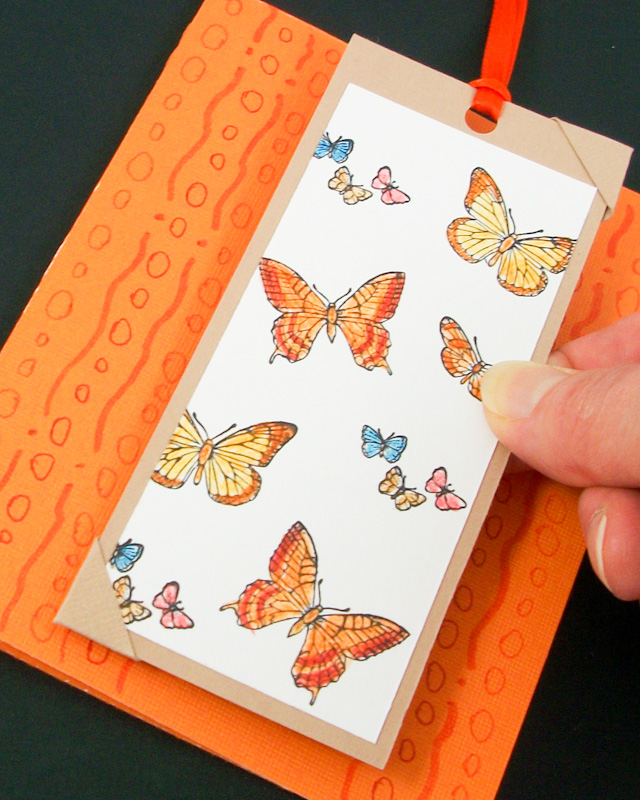
Two photo corners are used to mount the bookmark on the card front. Slip one photo corner on the upper right corner of the bookmark and another on the opposite corner. With the two photo corners on the bookmark, press the bookmark and photo corners in place on the card front.
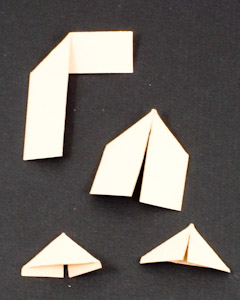
Tip: To make photo corners, fold both sides of the ½" by 2" strip on 45° angles to form a corner. Trim the tails. Apply glue or double-sided tape to the back of the corners. Use them to attach the bookmark to the card as described above.
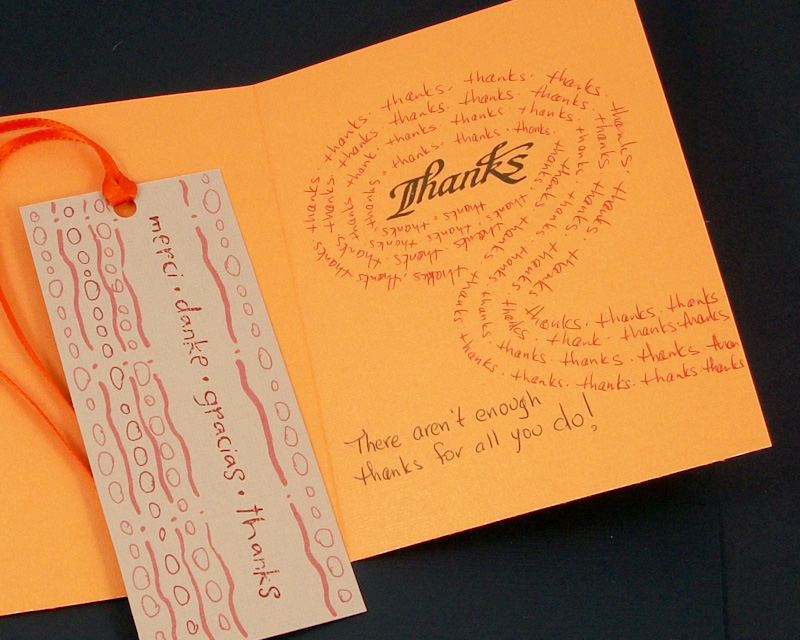
Decorate the reverse side of the bookmark with markers and rubber stamps, punches, stencils, or decorative paper.
Add a message to the inside of the card using black and colored markers, or insert a printed verse matted in a coordinating color of cardstock.
That's it! Your card is done!

Tip: Use Aunt Annie's set of Easter Dots digital papers to make Bookmark Cards for Easter or to make other handmade greeting cards. These digital papers coordinate with the Pastel Polka Dot digital papers.

To make Bookmark Cards for Easter, use Easter Dots digital paper and add Easter stickers or clip art. You might use the Easter stickers in the Easter Egg Holders craft project, and the bunny eating flowers clip art Designed by Wannapik.

Tip: Use Aunt Annie's coordinating Fishy Squiggles digital papers or Squiggly Fish digital papers to make bookmark greeting cards or other card.


Tip: Clip art and digital paper may be printed directly on medium tone cardstock. (A corner slot punch was used to cut the angled strips holding the bookmark.)
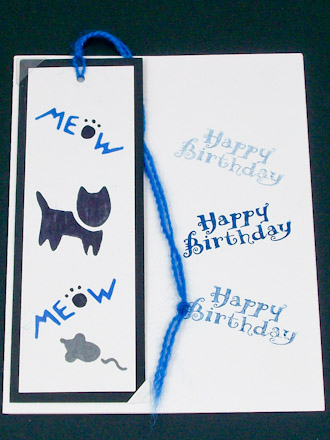
Tip: Stenciling is a quick way to make bookmarks.

Tip: Metallic felt-tip pens and gel pens can be used to decorate dark colored cardstock.
Related craft: This card is embellished with a simple Punched Bookmark.

