
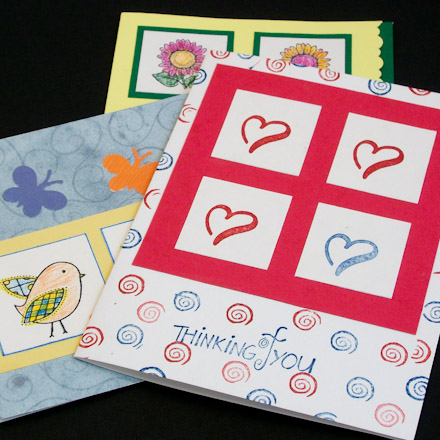
In this tutorial, you'll learn how to make cards using small rubber stamps arranged in threes or fours and matted. Once you learn this design concept, it can be used for repeats of any small object—paper punches, cutouts from decorative paper, stencils, and more.
This greeting card tutorial builds on the first two tutorials: #1: Four Patch Cards and #2: Matted Clip-Art and Photo Cards. It is also a basic introduction to using rubber stamps. (The universe of stamping is HUGE. Whole books are written on rubber stamping, some devoted to nothing but card making. There are thousands upon thousands of rubber stamps available for purchase.) For those with little or no rubber stamp experience, we keep it simple by using one small rubber stamp repeated three or four times.
Check out Aunt Annie's Rubber Stamping Tips for ways to get the best possible image from your rubber stamp.
 It's
easy to make cards for
Valentine's Day with repeats of stamped, punched or cutout
hearts. See example card above.
It's
easy to make cards for
Valentine's Day with repeats of stamped, punched or cutout
hearts. See example card above.
Refer to Tutorial #1: Four Patch Cards for how to make card blanks and envelopes.


There are three basic ways of arranging the repeats on your greeting card—three images arranged vertically
(or horizontally) and matted;
four images arranged in a square with a single large mat; or four images in a square with individual mats.
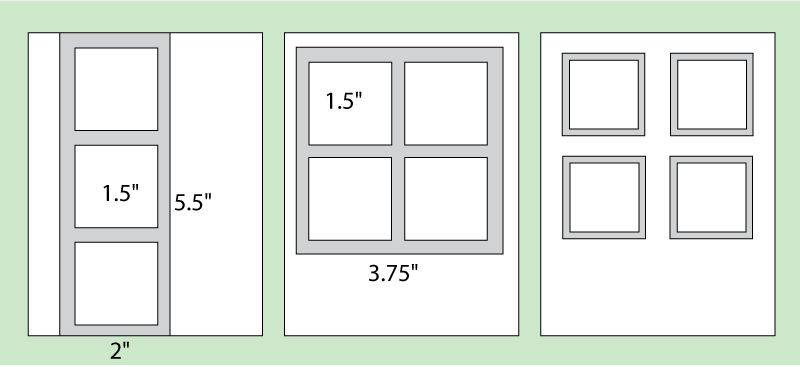
Pick a layout for your card before getting started.
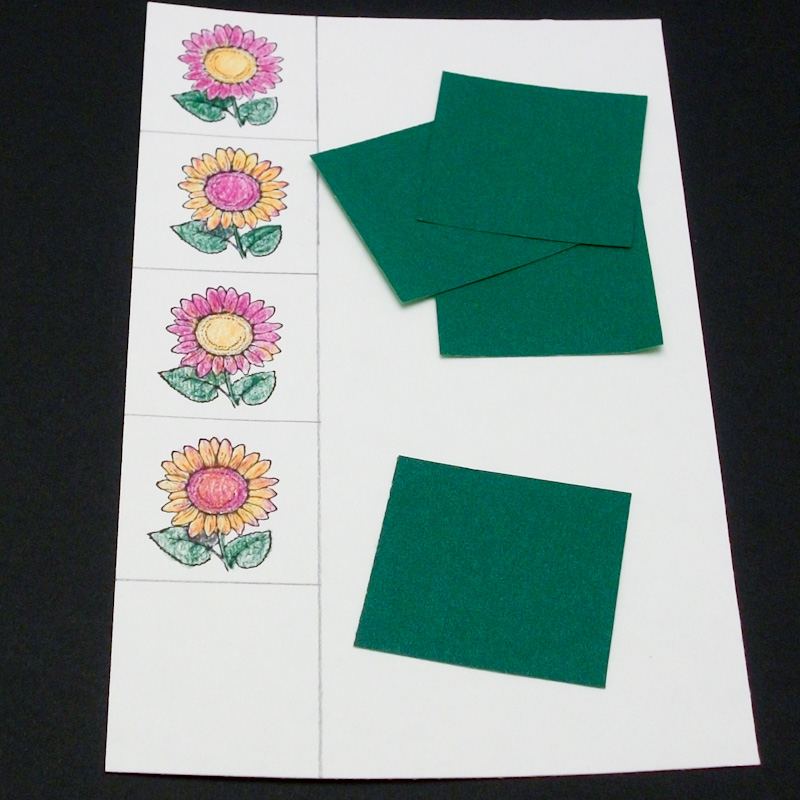
Project extra: Download, and print on cardstock, Aunt Annie's printable templates for mats and stamping strips to make mat cutting and repeat stamping easier. Choose your mat size, cut out the template, then anytime you need a mat of that size just trace it and cut. You can use the stamping strip templates in the same way or stamp directly on the strips and cut apart.
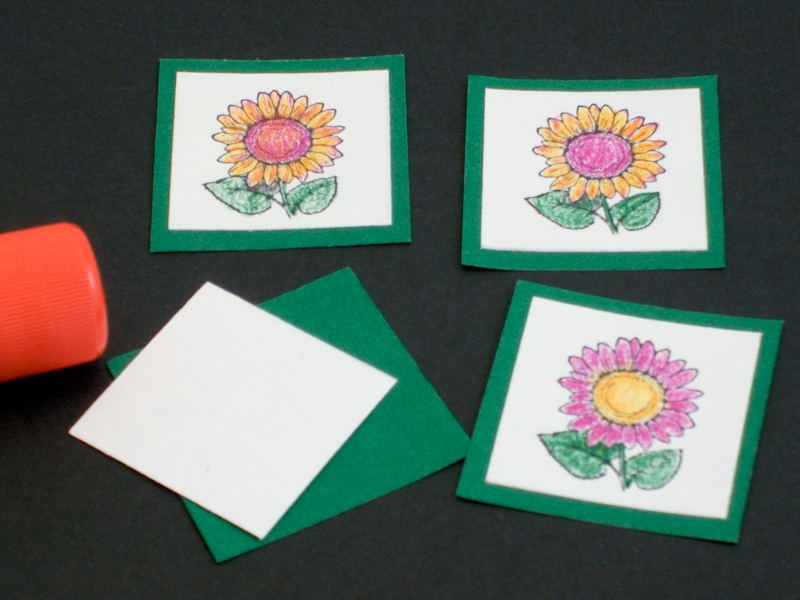
Glue stamped squares to the mat, then glue the mat to the card.
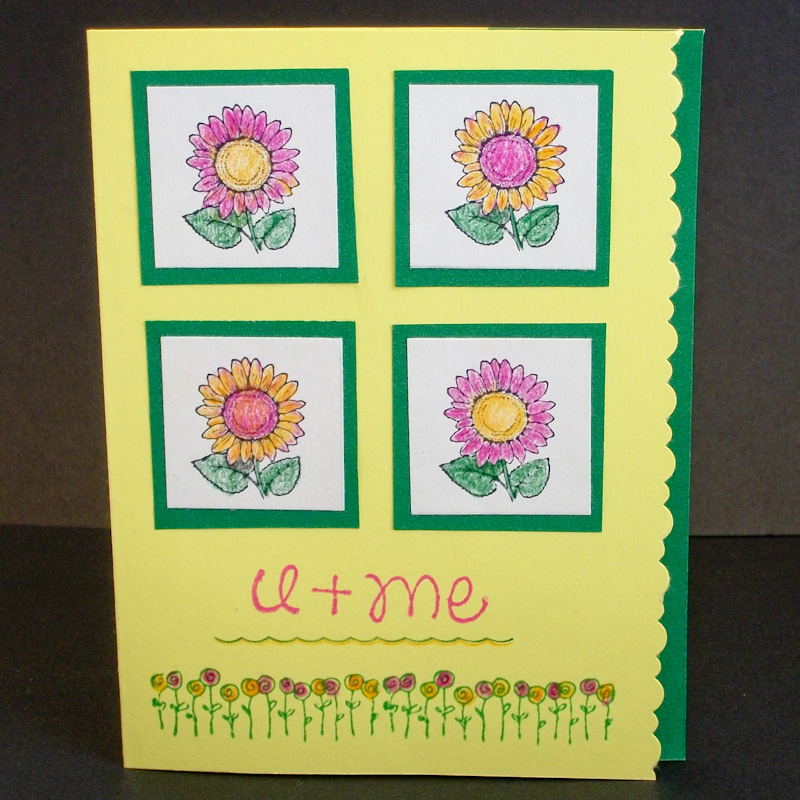
The right edge of this card was cut with decorative scissors. A green strip of paper was glued to the right edge inside the card to accent the scalloped edge. The card blank was made from yellow cardstock, and additional stamps were used to finish the card decoration.
That's it! What did you repeat on your card?

Tip: Repeating images can be cut from decorative paper. These yellow flowers come from Checked Yellow Flower digital paper of the Bright Retro Flowers collection.

Tip: The repeating circles in the Tranquil Circle digital papers can be used to make colorful cards.

Tip: For a birthday card, you might use colorful presents cut from one of the papers in Aunt Annie's Happy Birthday Collection.

Tip: Use different colors of stamp pads for your repeats. In this case, three hearts were stamped in red, and one in blue. The four heart images are on a single square mat.

Tip: Outline the image squares with colored pencil. This is especially effective on light-colored mats. The three birds are arranged horizontally on a single strip mat.

Tip: Decorate the card with tiny dots of paint.


